Automobile chassis :-

A vehicle frame is known as its chassis. It is the main supporting structure of a motor vehicle, to which all other components are attached, comparable to the skeleton of an organism.The underpart of a motor vehicle, on which the body is mounted, if the running gear such as wheels and transmission, and sometimes even the driver's seat, are included
Conventional Chassis -

In this type of chassis the body is made as a separate unit and then joined with ladder frame. It supports all the systems in a vehicle such as the Engine,Transmission system,Steering system,Suspension system.
The advantage of this conventional chassis is,it has Higher load capacity and strength.
Non conventional or frameless chassis -

In this type of chassis the ladder frame is absent and the
body itself act as the frame. It supports all the systems in a vehicle such as the Engine, Transmission system, Steering system,
Suspension system.
body itself act as the frame. It supports all the systems in a vehicle such as the Engine, Transmission system, Steering system,
Suspension system.
Advantage
- Less rattles and squeaks are developed.
- Handling is better due to the higher body rigidity and weight.
- The load carrying capacity is lower.
- It is not safe in accidental condition.
Backbone Chassis -

Backbone tube chassis is a type of automobile construction chassis that is similar to the body-on-frame design. Instead of a two-dimensional ladder-type structure, it consists of a strong tubular backbone (usually rectangular in cross section) that connects the front and rear suspension attachment areas.
Rolling Chassis -
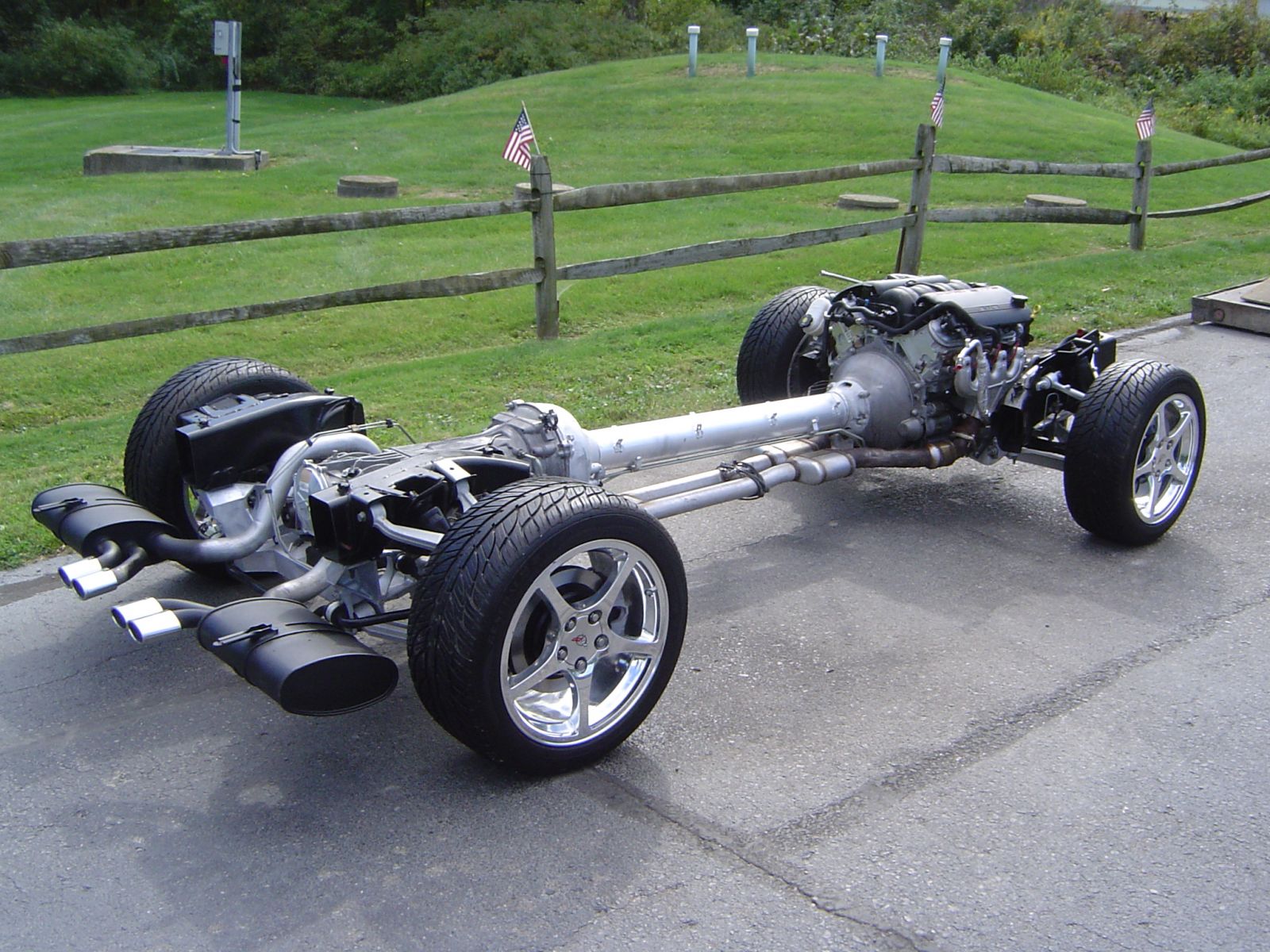
A rolling chassis is the chassis of a car or truck, assembled together with the engine and drive train, but without bodywork. Such rolling chassis were built by car makers, for supply to coach builder who would later build the bodywork. Although common in the early days of motoring, such rolling chassis are now rare. A few custom markets, such as limousines , may still use them.
In some cases, a rolling chassis had a basic fuel tank and driver's seat attached, so that they could be driven to the coach builder under their own power. This was more common for coaches and trucks, where specialized body styles were to be built by the coach builders , and the chassis was much larger than a car and so more difficult to carry by another vehicle.
Body on frame -

Body-on-frame is an automobile construction method where a separate body is mounted on a relatively rigid frame or chassis carrying the engine and drive train. The original method of building automobiles, body-on-frame construction is now used mainly for pickup trucks and SUV s.
Undercarriage -
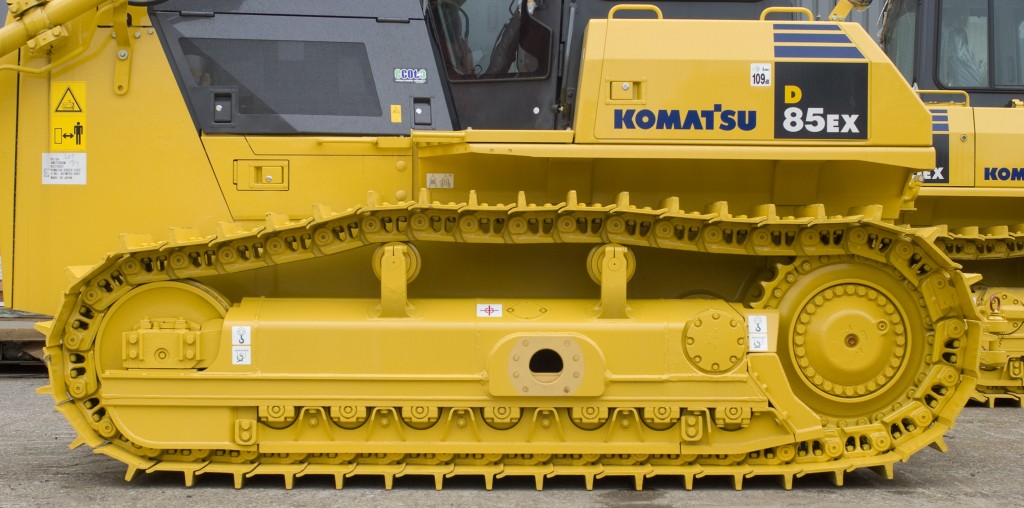
Undercarriage is the part of a moving vehicle that is underneath the main body of the vehicle. The term originally applied to this part of a horse-drawn carriage, and usage has since broadened to include:
- The landing gear of an aircraft.
- The chassis of an automobile.
- The tractor treads of a tractor or tank.
- The under frame of a locomotive
- The undercarriage assembly of a train car or locomotive, known as a bogie, incorporating the train wheel sets, suspension, brakes and, in powered units, the traction motors
Locomotive Frame -
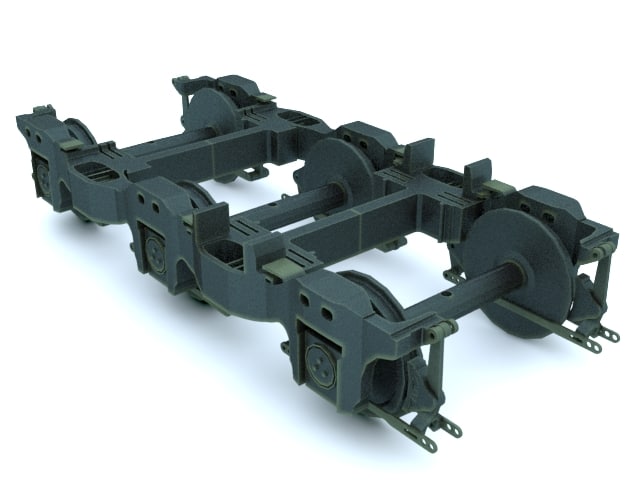
A locomotive frame is the structure that forms the backbone of the railway locomotive, giving it strength and supporting the superstructure elements such as a cab, boiler or bodywork. The vast majority of locomotives have had a frame structure of some kind. The frame may in turn be supported by axles directly attached to it, or it may be mounted on bogies (UK) / trucks (US), or a combination of the two. The bogies in turn will have frames of their own.

Underframe -

An under frame is a framework of wood or metal carrying the main body structure of a railway vehicle, such as a locomotive, carriage or wagon.
Monocoque -

Monocoque, also structural skin, is a structural system where loads are supported through an object's external skin, similar to an egg shell. The word monocoque is a French term for "single shell" or (of boats) "single hull". First used in boats, a true monocoque carries both tensile and compressive forces within the skin and can be recognised by the absence of a load-carrying internal frame.
Few metal aircraft can strictly be regarded as pure monocoques, as they use a metal shell or sheeting reinforced with frames riveted to the skin, but most of the wooden aircraft are described as monocoques, even though they also incorporate frames.

Comments
Post a Comment